MG Seed Bank Description
The Mediterranean Germplasm Genebank (MGG) collection contains 37,000+ accessions (plus 22,000+ historical records) belonging to more than 160 genera and over 600 species (a fully detailed, real-time updated report can be found on the page “MGD Statistics”). Over 13,000 accessions have been collected directly over time by exploration teams at the Institute of Biosciences and Bioresources (formerly the Germplasm Institute), while others have been acquired from other Institutions through material exchange.
The entire collection is currently being reorganized into new sliding-rack cabinets within refrigerated rooms (see below). Therefore, the total number of accessions available upon request may vary. However, more than 28,000 accessions have already been stored in the new cabinets and are fully available upon request.
Facilities and Equipments
The seed bank is endowed with refrigerated rooms at 5 °C, 0 °C and -20 °C, where more than 15,600 kgs of seeds are stored (see the page “MGD Statistics”). Here is the list of the main facilities available at the MG seed collection in Bari:
- 1 refrigerated room kept at -20° C for long-term storage
- 2 refrigerated rooms kept at 0 °C and 35% relative humidity for medium-term storage (“active” collections)
- 2 refrigerated rooms kept at 5 °C and 35% relative humidity for short-term storage (temporary material or material under processing, etc.)
- 1 refrigerated rooms kept at 5 °C for research materials
The equipment also includes vacuum machinery for the preparation of sealed, airtight cans (see the page "Snapshots from MGG").
Seven additional conservation rooms with similar characteristics (plus an additional dehumidification room at 10-20 °C and 7-15% relative humidity) are also available in Valenzano (Bari, Italy).
Seed conservation
Seeds maintained at 1-5 °C (approx. 8,600 kgs, overall) are stored in about 94,000 small paper bags, while those at -20 °C (approx. 7,100 kgs, overall) are stored in about 31,000 airtight-sealed cans, totaling over 125,000 items. All the material is lined up on labelled shelves within dark, refrigerated rooms and managed through advanced software facilities. A fully detailed, real-time updated report of the main features of the MGG seed collection can be found st the page “MGD Statistics”):


Field propagation
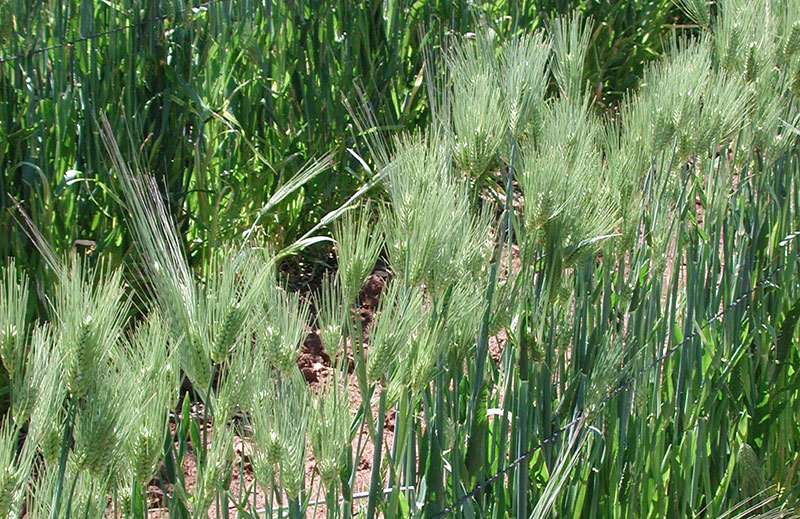
All the accessions included in the MGG are periodically refreshed through field multiplication/propagation according to the species' requirements and storage date at any of the following experimental sites:
To date, more than 49,000 accessions have been multiplied and refreshed over the period 1973-2024.
For experimental and field tests, the soil is plowed, fertilized, irrigated, and covered with protective nets following international standard procedure. Spikes/seeds are then collected, photographed, and threshed whenever needed. Samples are then weighed and placed in suitable bags in the dehumidifying chamber for medium- to long-term storage, following strict international protocols.
For a recently updated summary of the propagation activities carried out is displayed at the page “MGD Statistics”.